Showing posts with label Natural Fiber. Show all posts
Showing posts with label Natural Fiber. Show all posts
15 November 2012
Wool Finishing Processes
Wool Finishing Processes
The sequence of the treatments undergone by wool fibres
in various forms (staple, sliver, yarn, woven and knitted fabric)
varies according to the modification process of the fibre structure,
according to the type of processing system used and according to the
experience of the operator (these criteria are valid for all fibres).
Therefore the wool processing cycle can vary accordingly: an example is shown in the following.
Therefore the wool processing cycle can vary accordingly: an example is shown in the following.
Worsted Cycle:

Flowchart of worsted wool finishing process
Woollen Cycle:

Flowchart of woollen wool finishing process
28 October 2012
Flow Chart of Hemp Spinning
Hemp Preparation and Spinning:
The preparation process of long staple fibers allows to transform the sliver produced by the hackling machine into a 2 - 4 g/m roving through a series of drawing passages and a high number of doublings, which ensure the high blending rate necessary for heterogeneous fibers like hemp. The flow chart is similar to that used for flax processing and the machines employed are practically the same. At the delivery from last drawing passage, the sliver can be subjected to one of two alternative processes:
We point out that the card sliver has not the cleanness degree which is necessary to produce a regular yarn, therefore it requires a hackling operation on machines very similar to wool combers.
Tows can be dry or wet spun. For dry spinning, two kinds of spinning frames are used:
In
the case of hemp the processing of long staple yarns differs from the
processing of tow. Hemp reaches the mill in form of 400 to 1000 g
sheafs, which feed the hackling machine. The short fibers are collected
in boxes and delivered to the packing department as hackling tows.
The preparation process of long staple fibers allows to transform the sliver produced by the hackling machine into a 2 - 4 g/m roving through a series of drawing passages and a high number of doublings, which ensure the high blending rate necessary for heterogeneous fibers like hemp. The flow chart is similar to that used for flax processing and the machines employed are practically the same. At the delivery from last drawing passage, the sliver can be subjected to one of two alternative processes:
- Wet spinning, the typical process used for bast fibres, with bobbin drying and winding. As for flax, the roving can be degummed and bleached before spinning.
- Dry spinning directly from sliver through the same spinning frames used for flax tow spinning.
We point out that the card sliver has not the cleanness degree which is necessary to produce a regular yarn, therefore it requires a hackling operation on machines very similar to wool combers.
Tows can be dry or wet spun. For dry spinning, two kinds of spinning frames are used:
- With drafting cylinder systems which operate according to the typical criteria of the semi-worsted system, with settings suited to the high length of these fibres
- With gill-bars, i.e. with needle bars placed in the drafting fields assigned to the guide of the fibres, which are similar to those used for long fiber dry spinning.
Flow Chart of Hemp Spinning
 |
As already for flax, the prospects for a widening of hemp use are conditioned by the finishing operations. In fact the fibre can undergo some important changes, if the order and the crystalline lay-out of the fibrous cells are adequately varied ; moreover, if full advantage is taken of the inner channels (lumens) for fluid diffusion by preparing them for a more efficient migration of fluids capable of modifying the fiber’s physical properties, completely new handle and appearance effects, even adjustable by the finisher, can be obtained.
http://textilelearner.blogspot.com/
http://textilelearner.blogspot.com/
10 October 2012
Chemical Comosition of Jute fibres
A bast fiber used for sacking, burlap,
and twine as a backing material for tufted carpets. Jute is one of the
most affordable natural fibres and is second only to cotton in amount
produced and variety of uses of vegetable fibres. Jute fibres
are composed primarily of the plant materials cellulose (major
component of plant fibre) and lignin (major components of wood fibre).
Chemical Composition of Jute Fiber
- Cellulose → 65.2%
- Hemi-cellulose → 22.2%
- Lignin → 12.5%
- Water Soluble matter → 1.5%
- Fat and Wax → 0.6%
Defects in Jute
Rooty Jute: in these jute the lower parts of jute fires contain barks.
Specky jute: this defects occur because of insufficient washing which causes the outer barks to adhere in some places
Croppy Jute: this is a defect where the top end of the fibre become rough and hard. It is usually caused by careless steeping.
Knotty jute: the jute fibres contain knots in places and it is caused by insect bite or punctures.
Dezed or Dead fibres: due to over retting in moist condition, the fibre becomes dull, lose strength and becomes inferior for spinning.
Runners: this is a defect where long and hard barky ribbon of fibres remains in jute fibre.
Hunka: defects caused by non-removal of dried up base and hard bark from the fibres.
Mossy jute: fibres from short plants that cannot be properly stripped and cleaned contain broken piece of jute sticks etc.
Flabby or Fluffy jute: due to careless stripping, fibre loses firmness and becomes flabby and hairy
Heart damage: These defects
occur when jute fibre contains excess moisture when baled. The centre of
the bale becomes badly tendered and in some cases fibres are reduced to
powder.
http://textilelearner.blogspot.com/
http://textilelearner.blogspot.com/
6 October 2012
Physical Properties of Cotton Fibres
Cotton Fiber:
Properties of cotton fiber can be divided into two parts, one is according to physical structure and another is using process.
A. According to physical structure:
Length of cotton fiber:
Physically the individual cotton fibres consist of a single long tubular cell. Its length is about 1200-1500 times than its breadth. Length of cotton fibre varies from 16mm to 52 mm depending upon the type of cotton.
Longer the fibre, finer the fibre in case of cotton fibre. It is expressed in term of decitex and it varies from 1.1 to2.3 decitex.
Strength and extension of cotton fiber:
Cotton fibre is fairly among natural fibres in relation to tenacity which is 3-3.5g/dtex. Its tensile strength is between wool and silk fibre but disadvantage is low extension at break which is 5-7%.
Elastic properties of cotton:
Recovery from deformation of cotton fibre, yarn or fabric from applied load is very low. By applying heat it can’t be achieved. This property can be achieved by -1.Chemical treatment to improve crease recovery, but the problem is the materials become harsher due to chemical treatment 2. blending or mixing of cotton with elastic fibre, e.g. polyester, blend ratio depends on the end use of the fabric. The initial modulus is fairly high=0
5 g/dtex (wool=0.25 g/dtex)
Cross-section:
Cross-section of cotton fibre is some what ribbon like. The cell wall is rather thin and the lumen occupies about two-third of the entire breadth and shows up very prominent in polarized light. Fibre cross-section becomes round when mercerized.
Appearance:
Cotton fibre is fairly short, fine and creamy white color. Color of the fibre depends on soil of growth. By adding chemicals in the soil, color of the cotton fibre may be varied.
Crimp:
Cotton fibre is more or less twisted on its longitudinal axis which cab not be seen from out side is called convolution. The twist in the fibre does not to be continuous in one direction i.e. if at first right direction, then left direction. This property of cotton fibre helps in spinning.
B. According to using process:
Comfortable:
Soft Hand:
Absorbent:
Good Color Retention:
Machine Washable & Dry Cleanable:
Good Strength:
Cotton Fibre Drapes Well:
Sewing & Handling Is Easy:
Among
the seed and fruit fibres, cotton has grown in stature as the most
important textile fibre in the world. In fact, cotton is the backbone
and basic foundation of the world’s textile trade and industry. Cotton
is a natural vegetable fibre produced in the cotton plant in many
countries of the world even in Bangladesh also.
Properties of Cotton Fibres:
Properties of Cotton Fibres:
Properties of cotton fiber can be divided into two parts, one is according to physical structure and another is using process.
A. According to physical structure:
Length of cotton fiber:
Physically the individual cotton fibres consist of a single long tubular cell. Its length is about 1200-1500 times than its breadth. Length of cotton fibre varies from 16mm to 52 mm depending upon the type of cotton.
- Indian cotton- 16-25 mm
- American cotton- 20-30 mm
- Sea Island- 38-52 mm
- Egyptian cotton- 30-38 mm
Longer the fibre, finer the fibre in case of cotton fibre. It is expressed in term of decitex and it varies from 1.1 to2.3 decitex.
- Indian= 2.2-2.3dtex
- American= 2.1-2.2 dtex
- Egyptian= 1.2-1.8 dtex
- Sea Island= 1.0-1.1 dtex
Strength and extension of cotton fiber:
Cotton fibre is fairly among natural fibres in relation to tenacity which is 3-3.5g/dtex. Its tensile strength is between wool and silk fibre but disadvantage is low extension at break which is 5-7%.
Elastic properties of cotton:
Recovery from deformation of cotton fibre, yarn or fabric from applied load is very low. By applying heat it can’t be achieved. This property can be achieved by -1.Chemical treatment to improve crease recovery, but the problem is the materials become harsher due to chemical treatment 2. blending or mixing of cotton with elastic fibre, e.g. polyester, blend ratio depends on the end use of the fabric. The initial modulus is fairly high=0
5 g/dtex (wool=0.25 g/dtex)
Cross-section:
Cross-section of cotton fibre is some what ribbon like. The cell wall is rather thin and the lumen occupies about two-third of the entire breadth and shows up very prominent in polarized light. Fibre cross-section becomes round when mercerized.
Appearance:
Cotton fibre is fairly short, fine and creamy white color. Color of the fibre depends on soil of growth. By adding chemicals in the soil, color of the cotton fibre may be varied.
Crimp:
Cotton fibre is more or less twisted on its longitudinal axis which cab not be seen from out side is called convolution. The twist in the fibre does not to be continuous in one direction i.e. if at first right direction, then left direction. This property of cotton fibre helps in spinning.
B. According to using process:
Comfortable:
Cotton
fiber has large amorphous portion and this is why the air can be in and
out through cotton fiber. So, the fabric made by cotton fiber is quite
comfortable to use.
Soft Hand:
Cotton
fiber is too much regular fiber and if properly ginned; this fibre can
be the best soft hand feeling fibre amongst the others.
Absorbent:
Cotton fiber has high absorbency power and this is why this fiber can be died properly and without any harassment.
Good Color Retention:
If
the printing is applied on cotton fiber, it seems it doesn’t spread the
color outside the design. So printing efficiency is good on cotton
fibre.
Machine Washable & Dry Cleanable:
It
is seen that some fibers can’t be dried or washed due to it’s
sensitivity and weak fastness properties but in case of Cotton fiber you
will have large number of options to choose. You can easily wash the
cotton made fabric by machines and even you will be able to dry this
fiber by using electronic drier.
Good Strength:
If
you want to seek an average strength which might be enough for you;
then cotton fiber can be your ultimate choice. The strength of cotton
fiber is quite good.
Cotton Fibre Drapes Well:
The
drape-ability of cotton fibre is awesome. You can use the cotton fibre
made fabric in any kind of wear which needs more flexibility and
drapes.
Sewing & Handling Is Easy:
The
sewing efficiency on Cotton made fabric is easier and comfortable than
other fiber. This is why the demand of cotton made fabric is higher in
all over the world.
Uses of Cotton Fiber:
Cotton fiber is a versatile fibre which has wide variety of uses. But the Cotton fibre is mostly used on the Apparel Industry to make the wearing cloth like Sweaters, Skirts, Shirts, Swimwear, Kids wear, Blouses, Pants, Hosiery and to make other type of dresses.
http://textilelearner.blogspot.com/
Uses of Cotton Fiber:
Cotton fiber is a versatile fibre which has wide variety of uses. But the Cotton fibre is mostly used on the Apparel Industry to make the wearing cloth like Sweaters, Skirts, Shirts, Swimwear, Kids wear, Blouses, Pants, Hosiery and to make other type of dresses.
http://textilelearner.blogspot.com/
3 October 2012
Chemical Modification of Jute Fiber
Jute
is a natural biodegradable fiber with advantages such as high tensile
strength, excellent thermal conductivity, coolness, ventilation function
et al.1-2. Recently, due to the improvement of people’s living
standards and need for environmental protection, the demand of natural
biodegradable and eco-friendly fibers is rising worldwide day by day.
Ramie, flax, hemp and some other vegetable fibers have been used as
textile materials, but jute fiber
is basically used for traditional purposes such as manufacture of
sackings, hessian, carpet backing and the like. Taking account of the
costliness of ramie and the shortage in sources of flax, and the
challenges from the synthetic fibers in the traditional jute products
market, if jute could be used to replace ramie and flax partially as
textile material, not only the cost could be reduced but also a new
market would be provided for jute products.
 |
| Jute fiber |
Jute
fiber is a bast fiber obtained from the bark of jute plant containing
three main categories of chemical compounds namely cellulose (58~63%),
hemicellulose (20~24%) and lignin (12~15%), and some other small
quantities of constituents like fats, pectin, aqueous extract, et al.
Jute fiber is composed of small units of cellulose surrounded and
cemented together by lignin and hemi-cellulose10-11. The low cellulose
content, coarseness, stiffness, low extensibility, low grip performance
and some other disadvantages seriously restrict the raw jute fiber from
spinning. So a series of wet chemical processing sequences are needed to
improve the spinnability of jute. The qualities of the fiber and yarn
mostly depend on the degumming effect. So degumming is one of the most
important sequences in the chemical processing of jute.
Generally, there are three methods for degumming, i.e., mechanical, chemical and biological methods. The mechanical methods such as steam explosion2,14, microwave and ultrasonic 15 have very limited effect on improving the spinnability of jute fiber. Biodegumming is an eco-friendly method has some advantages viz. mild conditions and high efficiency. However, the application of enzymes for degumming is hindered by some factors such as high substrate specificity, low activity stability, high cost, and low total gum decomposition16-18. The chemical method is the most commonly used method for degumming, but this traditional method has some major disadvantages like serious environmental pollution, lengthy time required and high cost 19. Taking account of these problems, it is urgent to improve the degumming method for natural fibers.
In our previous study, the pre-chlorite treatment of jute fiber before degumming has been reported to lighten the burden of degumming and enhance delignification20. In this paper, we report the chemical degumming of the pre-chlorite treated jute fiber. Both the gum decomposition and the spinnabilities viz. fineness, breaking strength and breaking extension were tested to optimize the conditions for degumming. Changes in the constituent content of the treated jute fiber were also analyzed.
Materials and Method:
Materials
Jute:
Lightly combed and dewaxed raw jute fiber.
Chemicals:
Sodium chlorite and sodium silicate, Acetic acid, sodium acetate, sodium hydroxide and sulphuric acid , Penetrating agent TF-107B and degumming agent TF-125A .
Methods
Pre-chlorite treatment
The samples were treated in a bath with sodium chlorite 1.5g/L, pH 3, liquor ratio 1:10, and kept at 30℃ for 30 min. and then thoroughly washed.
Scouring
The pre-chlorite treated jute fiber was treated with sodium hydroxide 5-30g/L, sodium silicate 1.0-5.0g/L, TF-107B 0.5-6.0g/L, TF-125A 1.0-8.0g/L, and kept at 60-100℃ for 60-240 min. with fiber to liquor ratio 1:10-1:40. At the end of the desired treatment, the fibers were neutralized with sulphuric acid, and then thoroughly washed with distilled water.
Testing
Breaking strength and breaking extension were tested using a XQ-1 fiber breaking strength machine in a constant 20℃ temperature and 65% relative humidity room (in accordance with ASTM Method D-5035). The fineness was tested according to GB/T12411.3. The constituent contents were tested according to GB/5889–86.
http://textilelearner.blogspot.com/
Generally, there are three methods for degumming, i.e., mechanical, chemical and biological methods. The mechanical methods such as steam explosion2,14, microwave and ultrasonic 15 have very limited effect on improving the spinnability of jute fiber. Biodegumming is an eco-friendly method has some advantages viz. mild conditions and high efficiency. However, the application of enzymes for degumming is hindered by some factors such as high substrate specificity, low activity stability, high cost, and low total gum decomposition16-18. The chemical method is the most commonly used method for degumming, but this traditional method has some major disadvantages like serious environmental pollution, lengthy time required and high cost 19. Taking account of these problems, it is urgent to improve the degumming method for natural fibers.
In our previous study, the pre-chlorite treatment of jute fiber before degumming has been reported to lighten the burden of degumming and enhance delignification20. In this paper, we report the chemical degumming of the pre-chlorite treated jute fiber. Both the gum decomposition and the spinnabilities viz. fineness, breaking strength and breaking extension were tested to optimize the conditions for degumming. Changes in the constituent content of the treated jute fiber were also analyzed.
Materials and Method:
Materials
Jute:
Lightly combed and dewaxed raw jute fiber.
Chemicals:
Sodium chlorite and sodium silicate, Acetic acid, sodium acetate, sodium hydroxide and sulphuric acid , Penetrating agent TF-107B and degumming agent TF-125A .
Methods
Pre-chlorite treatment
The samples were treated in a bath with sodium chlorite 1.5g/L, pH 3, liquor ratio 1:10, and kept at 30℃ for 30 min. and then thoroughly washed.
Scouring
The pre-chlorite treated jute fiber was treated with sodium hydroxide 5-30g/L, sodium silicate 1.0-5.0g/L, TF-107B 0.5-6.0g/L, TF-125A 1.0-8.0g/L, and kept at 60-100℃ for 60-240 min. with fiber to liquor ratio 1:10-1:40. At the end of the desired treatment, the fibers were neutralized with sulphuric acid, and then thoroughly washed with distilled water.
Testing
Breaking strength and breaking extension were tested using a XQ-1 fiber breaking strength machine in a constant 20℃ temperature and 65% relative humidity room (in accordance with ASTM Method D-5035). The fineness was tested according to GB/T12411.3. The constituent contents were tested according to GB/5889–86.
http://textilelearner.blogspot.com/
22 September 2012
Types of Jute Yarns
Jute yarn is generally available in single and multiple twists.
Available in various specifications, these cater to needs of developing
market. Winding in cylindrical, conical and cone less spools or hanks
is done as per prerequisites of our customers. This excellent jute yarn
finds extensive application in carpet industry.
Now we will discuss about the types of jute yarn and batch selection technique of jute yarn.
 |
| Jute yarn |
1. Hassian Warp:
These
types of yarn are good, clean and free from specks with high lusture.
For manufacturing this type of yarn, clean and defect free jute is
required. To make this type of yarn clean and defect free jute is required.
Batch Selection:
Hard jute .......................................70%
Soft jute ........................................30%
Example: For 8 lbs/spyndle hassian warp
White C........................................40%
White X ...................................... 40%
Tossa ...........................................20%
2. Hassian Weft:
Soft jute ........................................30%
Example: For 8 lbs/spyndle hassian warp
White C........................................40%
White X ...................................... 40%
Tossa ...........................................20%
2. Hassian Weft:
Hassian
weft yarn is cleaner and softer than hassian warp yarn. So for hassian
weft clean fibre is required, but fibre of lower strength can be used to
hassian weft yarn.
Batch Selection:
Batch Selection:
For Heavy Yarn
Hard jute..................................30%
Soft jute ...................................70%
For Light Yarn
Hard jute .................................50%
Soft jute ...................................50%
Example: For 8.5 lbs/spyndle hassian weft
White C ...................................40%
White X ...................................40%
Tossa ........................................20%
3. Sacking Warp:
Hard jute..................................30%
Soft jute ...................................70%
For Light Yarn
Hard jute .................................50%
Soft jute ...................................50%
Example: For 8.5 lbs/spyndle hassian weft
White C ...................................40%
White X ...................................40%
Tossa ........................................20%
3. Sacking Warp:
Sacking warp jute
yarn is good and strong. Specks and colour is not important when
manufacturing this type of yarn. So, 70 to 80% Tossa jute can be used.
Batch Selection:
Batch Selection:
Hard jute ................................... 60%
Soft jute .....................................40%
Example: For 8 lbs/spyndle sacking warp
X bottom ..................................67%
S M R ......................................33%
4. Sacking Weft:
Soft jute .....................................40%
Example: For 8 lbs/spyndle sacking warp
X bottom ..................................67%
S M R ......................................33%
4. Sacking Weft:
Sacking weft yarns are low quality yarn. It is coarse and is made from low grade jute fibre. It may contain line cuttings, bale cuttings, soft and hard waste, rope waste, jute dust, habijabi and entangled jute.
Example: For sacking weft
NC .......................................................70%
S M R ..................................................15%
Caddis ..................................................5%
Thread waste and gunny cuttings............10%
5. C.B.C (carpet breaking cloth):
Batch Selection:
Example: For sacking weft
NC .......................................................70%
S M R ..................................................15%
Caddis ..................................................5%
Thread waste and gunny cuttings............10%
5. C.B.C (carpet breaking cloth):
Batch Selection:
Hard jute ................................... 100%
Example: For 8 lbs/spyndle C.B.C warp
B.W.B ....................................... 40%
B.W.C ...................................... 60%
Example: For 8 lbs/spyndle C.B.C weft
http://textilelearner.blogspot.com/
Example: For 8 lbs/spyndle C.B.C warp
B.W.B ....................................... 40%
B.W.C ...................................... 60%
Example: For 8 lbs/spyndle C.B.C weft
http://textilelearner.blogspot.com/
21 September 2012
Properties/Characteristics of Linen Fiber
Linen Fiber:
Linen is a cellulosic fibers derived from the stem of the flax plant
or a fabric made from these fibers. Linen fibers are much stronger and
more lustrous that cotton; they yield cool, absorbent fabrics that
wrinkle easily. Fabrics with linen-like texture and coolness but with
good wrinkle resistance can be produced from manufactured fibers and
blends.
Properties/Characteristics of Linen Fiber:
Linen is comfortable, good strength, twice as strong as cotton, hand-washable or dry-cleanable, crisp hand tailors, well absorbent dyes and prints, well light weight to heavy weight, no static or pilling problems, fair abrasion resistant etc. Basically there are two types of properties of linen fibers. One is physical properties and another is chemical properties.
Physical Properties of Linen:
 |
| Linen Fiber |
Linen is comfortable, good strength, twice as strong as cotton, hand-washable or dry-cleanable, crisp hand tailors, well absorbent dyes and prints, well light weight to heavy weight, no static or pilling problems, fair abrasion resistant etc. Basically there are two types of properties of linen fibers. One is physical properties and another is chemical properties.
Physical Properties of Linen:
Physical properties of linen fibers are given below:
- Tensile Strength: Linen is a strong fiber. It has a tenacity of 5.5 to 6.5 gm/den. The strength is greater than cotton fiber.
- Elongation at break: Linen does not stress easily. It has an elongation at break of 2.7 to 3.5 %.
- Color: The color of linen fiber is yellowish to grey.
- Length: 18 to 30 inch in length.
- Lusture: It is brighter than cotton fiber and it is slightly silky.
- Elastic Recovery: Linen fiber has not enough elastic recovery properties like cotton fiber.
- Specific Gravity: Specific gravity of linen fiber is 1.50.
- Moisture Regain (MR %): Standard moisture regain is 10 to 12%.
- Resiliency: Very poor.
- Effect of Heat: Linen has an excellent resistance to degradation by heat. It is less affected than cotton fiber by the heat.
- Effect of Sun Light: Linen fiber is not affected by the sun light as others fiber. It has enough ability to protect sun light.
Chemical Properties of Linen:
Linen is a natural cellulosic fiber and it has some chemical properties. Chemical properties of the linen fiber are given below:
- Effect of Acids: Linen fiber is damaged by highly densified acids but low dense acids does not affect if it is wash instantly after application of acids.
- Effects of Alkalis: Linen has an excellent resistance to alkalis. It does not affected by the strong alkalis.
- Effects of Bleaching Agents: Cool chlorine and hypo-chlorine bleaching agent does not affect the linen fiber properties.
- Effect of Organic Solvent: Linen fiber has high resistance to normal cleaning solvents.
- Effect of Micro Organism: Linen fiber is attacked by fungi and bacteria. Mildews will feed on linen fabric, rotting and weakling the materials. Mildews and bacteria will flourish on linen under hot and humid condition. They can be protected by impregnation with certain types of chemicals. Copper Nepthenate is one of the chemical.
- Effects of Insects: Linen fiber does not attacked by moth-grubs or beetles.
- Dyes: It is not suitable to dye. But it can be dye by direct and vat dyes.
Major End Uses Linen Fabric:
Apparel:
Apparel:
- dresses,
- suits,
- separates,
- skirts,
- jackets,
- pants,
- blouses,
- shirts,
- children's wear etc.
Home Fashion :
- curtains,
- draperies,
- upholstery,
- bedspreads,
- table linens,
- sheets,
- dish towels etc.
12 September 2012
Weighting of Silk
Weighting of Silk:
The process of increasing the weight of the silk material is known as weighting of silk.
Object of Silk Weighting:
Object of Silk Weighting:
- After the processing of silk material, it loses about 25% of its weight particularly after degumming.
- This loss in weight leads to a great loss of money since they are very expensive.
- To compensate the loss, some weight is artificially added to the material by chemical means.
- During degumming of silk, a weight loss of 25% is normally observed in case of silk fabrics.
- Owing to the expensive nature of silk, it is necessary to compensate the weight loss.
 |
| Silk Weighting |
Other Objects:
Tin salts are widely used for silk weighting.
There are three methods which are followed:
1st method:
The silk is soaked with stannic chloride solution followed by fixation with sodium carbonate followed by soaping.
Marginal weight increase is observed but the strength is also adversely affected in this method.
2nd method:
3rd method:
Stannic chloride + sodium phosphate Tin phosphate
Tin phosphate + sodium silicate Tri silicate of tin
http://textilelearner.blogspot.com/2013/01/weighting-of-silk-object-of-silk.html
- Weighting is also done to reduce limpness.
- To impart a bulky effect.
- To control the scroopy effect.
- To give body to the fabric.
- To give a greater filling capacity.
Tin salts are widely used for silk weighting.
There are three methods which are followed:
1st method:
The silk is soaked with stannic chloride solution followed by fixation with sodium carbonate followed by soaping.
Marginal weight increase is observed but the strength is also adversely affected in this method.
2nd method:
- The silk is soaked in stannic chloride and the fixed with sodium phosphate.
- It is then washed and treated with little amount of sulphuric acid.
- It is then soured, washed and taken out.
3rd method:
- In this method the fixation is done with sodium silicate.
- This brings out the required increase in weight without affecting the strength much.
- In the normal practice silk is soaked in stannic chloride solution called Picking.
- Later it is treated with sodium phosphate called Phosphating.
- The picking and Phosphating is carried out alternatively till the sufficient weight is achieved and the sequence is:
- Picking washing - Phosphating - acidifying
- Finally after sufficient loading it is treated with Sodium Silicate.
Stannic chloride + sodium phosphate Tin phosphate
Tin phosphate + sodium silicate Tri silicate of tin
http://textilelearner.blogspot.com/2013/01/weighting-of-silk-object-of-silk.html
4 September 2012
Jute Products
Jute Products:
Jute has versatile use in our day to day life. Some products of jutes are highlighted in below:
Jute Bags : Jute Hand Bags , Jute Beach Bags, Jute Shopping Bags, Jute Sling Bags, Jute Christmas Bags, Jute Sacking Bag, Jute Promotional Bags, Jute Bottle Bags, Jute Hessian Cloth Bags, Jute Hydro-Carbon Free Bags, Jute Food Grade Bags
Jute Apparel: Jute Jacket, Jute Footwear, Jute Fashion Accessories
Jute has versatile use in our day to day life. Some products of jutes are highlighted in below:
Jute Bags : Jute Hand Bags , Jute Beach Bags, Jute Shopping Bags, Jute Sling Bags, Jute Christmas Bags, Jute Sacking Bag, Jute Promotional Bags, Jute Bottle Bags, Jute Hessian Cloth Bags, Jute Hydro-Carbon Free Bags, Jute Food Grade Bags
 |
| Jute bag |
Jute Handicrafts:
Notebook, Pen holder, Greeting cards, Photo frame, file folder, Gift
Box, Memo Box, Tissue Box, Slip Pad Holder, Jute Wall Hangings, Jute
Coasters, Jute Table Mats, Jute Hammocks, Jute Lamp Shades, Jute
Stationery
 |
| Jute Gift box |
Jute Textile: Jute Hessian Cloth or Burlap, Jute Geo Textiles, Jute Yarn, Jute Hydro-Carbon Free Cloth, Jute Carpet Backing Cloth (CBC), Jute Canvas,
 |
| Jute apparel |
 |
| Jute fashion bag |
 |
| Jute footwear |
Jute Furnishings: Jute Mats & Durries, Jute Cushion Covers, Jute Fabrics, Jute Blinds, Jute Rugs, Jute Carpets
 |
| Jute furnishing |
26 August 2012
Plasma Treatment of Wool
Plasma Treatment of Wool:
Wool is a protein fiber. It is obtained from the fleece of the sheep or lamb or hair of the Angora or Cashmere goat. The effects of a plasma treatment on wool has revolutionary changed such as anti-felting effect, degreasing, improved dyestuff absorption and increase in wetting properties have been discussed in this article.
Effects of Plasma Treatment on Wool:
Wool is a protein fiber. It is obtained from the fleece of the sheep or lamb or hair of the Angora or Cashmere goat. The effects of a plasma treatment on wool has revolutionary changed such as anti-felting effect, degreasing, improved dyestuff absorption and increase in wetting properties have been discussed in this article.
Effects of Plasma Treatment on Wool:
- Plasma treatment increases the fibre/fibre friction as measured by Roder method, but reduces the differential friction effect (DFE) as defined by Mercer and Lindberg.
- Plasma treatment does not change the strength and elongation; the breaking force in loop form is slightly reduced.
- The plasma treatment increases the top cohesion by a factor of 1.5-2.0; this increased cohesion remains stable after prolonged storage.
- The specific electrical resistivity does not change considerably after plasma treatment.
- The fatty matter content in wool is reduced by about one-third due to plasma treatment.
- The water content of the wool top is reduced by about 3% due to plasma treatment.
- There is changes in spinning behavior of plasma treated wool. The spinning aids applied on the first drawing frame are carefully selected. The rubbing intensity or twist of the slubbing should be increased. Reduction in breaks rate at ring spinning frame is usually observed and an increase in yam tenacity by 20-25% is observed for all yarns.
 |
| Treated and untreated of wool |
Plasma treatment of wool followed by
polymer application has also been studied. Almost all polymers used
currently on pre-chlorinated wool cannot be used on plasma-treated top.
Silicone resins applied to plasma-treated wool increase the shrinkage
over that for untreated wool. However, the combined plasma/PMS/Hercosett
treatment encompassing the top treatment gives excellent shrink
resistance. The polymer after-treatment reduces both relaxation and
felting shrinkage almost independently of plasma treatment time.
There is more even and quicker penetration of dyestuffs and chemicals on plasma treated wool than the untreated reference sample. The increased dyes and chemicals affinity is presumably attributed to the plasma induced oxidation of the cystine in the layer of the exocuticula and thereby to a reduction of the wetting bridge density in the fibre surface.
Surface analyses of wool fibres treated with different plasma gases reveal that the wettability, wickability, printability and surface contact angle of the materials are significantly changed in a direction that may lead to new uses for these materials. Several aspects affect the web wettability, such as pore size, fibre diameter, fibre surface roughness and fibre surface chemical composition. Chemical composition of the fibre surface is most important as it determines the surface bonding forces with water, i.e. disruption force, polar force, and H-bonding force. Surface roughness is not a primary reason for improved wettability, but it may increase it.
Plasma treatment increases the hydrophillic groups in the wool fibre and the cystine present in the surface layer is converted to cysteic acid. The endocuticle and the intercell membrane complex and the density of cross-links in the surface layer is decreased by the reactive species in the plasma gas and thus facilitate diffusion of dyes and chemicals. The internal lipids of cell membrane complex are also modified to a certain extent. These changes in the interior of the fibre are presumably caused by the short wave ultra-violet radiation which is produced by the low temperature glow-discharge plasma apart from the chemical active species such as electrons, radicals etc.
Woollen sliver and yarn have been treated in low temperature plasma in a vacuum chamber for times from 20 to 30 min. There is a significant increase in the strength which lead to better stability of the material during subsequent processing. Fabrics made from treated wool do not felt and also the shrinkage is reduced e.g. from 37% to 3-5%.
Plasma treated wool may exhibit more or less firm or harsh handle because of surface roughening. This property is very important for hand-knitting yarns or yarns for underwear fabrics. Softeners generally deteriorate the shrink resistance imparted by plasma treatment or plasma plus polymer after-treatment quite heavily. The enzyme treatment is capable of improving the handle of plasma treated wool as well as plasma treated and polymer after-treated hand-knitting yarns without imparting their shrink resistance.
Conclusion:
A lot of changes occur after plasma treatment on wool. Besides, atmospheric pressure plasma treatment of wool fabric, with a relatively short exposure time, effectively removed the covalently bonded lipid layer from the wool surface. The plasma‐treated fabric showed increased wettability and the fibres showed greater roughness. X‐ray photoelectron spectroscopy analysis showed a much more hydrophilic surface with significant increases in oxygen and nitrogen concentrations and a decrease in carbon concentration.
References:
There is more even and quicker penetration of dyestuffs and chemicals on plasma treated wool than the untreated reference sample. The increased dyes and chemicals affinity is presumably attributed to the plasma induced oxidation of the cystine in the layer of the exocuticula and thereby to a reduction of the wetting bridge density in the fibre surface.
Surface analyses of wool fibres treated with different plasma gases reveal that the wettability, wickability, printability and surface contact angle of the materials are significantly changed in a direction that may lead to new uses for these materials. Several aspects affect the web wettability, such as pore size, fibre diameter, fibre surface roughness and fibre surface chemical composition. Chemical composition of the fibre surface is most important as it determines the surface bonding forces with water, i.e. disruption force, polar force, and H-bonding force. Surface roughness is not a primary reason for improved wettability, but it may increase it.
Plasma treatment increases the hydrophillic groups in the wool fibre and the cystine present in the surface layer is converted to cysteic acid. The endocuticle and the intercell membrane complex and the density of cross-links in the surface layer is decreased by the reactive species in the plasma gas and thus facilitate diffusion of dyes and chemicals. The internal lipids of cell membrane complex are also modified to a certain extent. These changes in the interior of the fibre are presumably caused by the short wave ultra-violet radiation which is produced by the low temperature glow-discharge plasma apart from the chemical active species such as electrons, radicals etc.
Woollen sliver and yarn have been treated in low temperature plasma in a vacuum chamber for times from 20 to 30 min. There is a significant increase in the strength which lead to better stability of the material during subsequent processing. Fabrics made from treated wool do not felt and also the shrinkage is reduced e.g. from 37% to 3-5%.
Plasma treated wool may exhibit more or less firm or harsh handle because of surface roughening. This property is very important for hand-knitting yarns or yarns for underwear fabrics. Softeners generally deteriorate the shrink resistance imparted by plasma treatment or plasma plus polymer after-treatment quite heavily. The enzyme treatment is capable of improving the handle of plasma treated wool as well as plasma treated and polymer after-treated hand-knitting yarns without imparting their shrink resistance.
Conclusion:
A lot of changes occur after plasma treatment on wool. Besides, atmospheric pressure plasma treatment of wool fabric, with a relatively short exposure time, effectively removed the covalently bonded lipid layer from the wool surface. The plasma‐treated fabric showed increased wettability and the fibres showed greater roughness. X‐ray photoelectron spectroscopy analysis showed a much more hydrophilic surface with significant increases in oxygen and nitrogen concentrations and a decrease in carbon concentration.
References:
- Chemical Technology in the Pre-treatment Processes of Textiles by S.R. Karmakar
- Study of atmospheric plasma treatment of wool fibers by Illya Kulyk, Marco Scapinello, Matteo Stefan
- Ageing effect of plasma‐treated wool by Maryam Naebe, Ron Denning, Mickey Huson, Peter G. Cookson & Xungai Wang
15 August 2012
Classification of Jute
Classification of Jute:
Classification of jute according to the quality (Geographical distribution according to Bangladesh):
District:
District jute is close to jat in quality.
The hard district jute is better than the soft district.It mainly grows in the district of Faridpur
Soft district:
This type of jute grows in district of Noakhali,Pabna,Barisal,Jessor,Khulna,Sylhet,Lower Comilla,Chittagong and some part of Dhaka.
Northern:
Classification of jute according to the quality (Geographical distribution according to Bangladesh):
- Jat
- District
- Northern
- Jat is the finest quality jute with firm
- It has good color and length
- It has good luster
 |
| Jute plant |
District jute is close to jat in quality.
- The fiber is not uniform in textures and strands
- Its color varies from light ream to dull grey
- Its length is shorter.
- Hard district
- Soft district
The hard district jute is better than the soft district.It mainly grows in the district of Faridpur
Soft district:
This type of jute grows in district of Noakhali,Pabna,Barisal,Jessor,Khulna,Sylhet,Lower Comilla,Chittagong and some part of Dhaka.
Northern:
- Northern jute is of somewhat inferior quality.
- The fiber is dull-colored fluffy hairy and barky
- Generally medium length and weak.
10 August 2012
Wool Glazing Machine
Wool Glazing Machine
This special machine is used to perform functional finishing on wool fabrics after raising finishing. The machine is made up of two different units.
1.Starching Unit
2.Glazing Unit
The Starching Unit Includes:
1) a vat containing water and silicones;
2) a variable-speed extracting cylinder to reduce the quantity of liquid to be passed onto the fabric;
3) a brush coated with horsehair adhering to the extracting cylinder and passing the liquid onto the fibre ends of the fabric, simultaneously combing and lining up the fibres.
The Glazing Unit Includes:
The Starching Unit Includes:
1) a vat containing water and silicones;
2) a variable-speed extracting cylinder to reduce the quantity of liquid to be passed onto the fabric;
3) a brush coated with horsehair adhering to the extracting cylinder and passing the liquid onto the fibre ends of the fabric, simultaneously combing and lining up the fibres.
The Glazing Unit Includes:
- A crenellated polishing cylinder (made of steel and coated with hard chrome) heated by means of electric resistances at temperatures up to 220°C and four spiral grooves on which hard-steel combs are assembled. These combs have very fine teeth to enhance the efficiency of fibre ironing during the process;
- A felt sleeve, rotating at the same speed of the fabric, presses the fabric onto the polishing cylinder. The contact arc on the polishing cylinder can vary and the cylinder can reach a temperature of 130°C.
 |
| Wool glazing machine |
The
fabric with the fibre ends already combed and wet come under the
polishing cylinder, which dries and irons the pile, and confers a
lustrous appearance by giving a soft and smooth hand, also thanks to the
silicones added to the starching vat (thanks to this process the fabric
acquires a hand similar to the precious wool one).
By adjusting the temperature and the speed of the polishing cylinder, the contact arc of the fabric on the cylinder and the contrasting pressure of the felting material, it is possible to obtain different types of finishing (from the laid down to the perfectly lined up one).
http://textilelearner.blogspot.com/
By adjusting the temperature and the speed of the polishing cylinder, the contact arc of the fabric on the cylinder and the contrasting pressure of the felting material, it is possible to obtain different types of finishing (from the laid down to the perfectly lined up one).
http://textilelearner.blogspot.com/
27 July 2012
Worsted Wool
What is Worsted Wool?
Well, the differences between woollens and worsteds begin at the
carding stage. 'Carding' is one of the processes which untangles the
wool fibers and lays them straight, side by side. It also helps to clean
the fibers of debris. Both woollens and worsteds are carded.
'Combing' is the next process in establishing what is worsted wool. Combing removes shorter length fibers and helps to further straighten the fibers and lay them parallel. Combing also helps to clean more debris from the fibers. Only worsteds are combed.
During spinning, worsted yarns have more twist inserted which makes them a firmer, stronger yarn. This in turn makes worsted fabrics stronger than woollens.
While I'm explaining to you what is worsted wool, I should show you the different characteristics of worsted and woollen yarns and fabrics. Here you go...
Worsted Yarns
Worsted Fabrics
'Combing' is the next process in establishing what is worsted wool. Combing removes shorter length fibers and helps to further straighten the fibers and lay them parallel. Combing also helps to clean more debris from the fibers. Only worsteds are combed.
During spinning, worsted yarns have more twist inserted which makes them a firmer, stronger yarn. This in turn makes worsted fabrics stronger than woollens.
While I'm explaining to you what is worsted wool, I should show you the different characteristics of worsted and woollen yarns and fabrics. Here you go...
Worsted Yarns
- Have a long staple length (4 inch fibers and longer only)
- Are carded and combed
- Have a tight twist in spinning
- Are stronger
- Are finer, smoother, and have more even fibers
- Are harder
- Have a short staple (1 - 4 inch long fibers)
- Are carded only
- Have a slack twist
- Are weaker
- Are bulkier
- Are softer
Worsted Fabrics
- Have a distinct woven pattern and are more closely woven
- Have a hard finish for a flatter, smoother look
- Are firm, wiry or harsh, and smooth or rough
- Wrinkle less, are more long-lasting, and hold creases and shape
- Are more expensive and good for tailored clothing and suits
- Have a less obvious pattern
- Have a soft finish (maybe felted, or steamed)
- Are soft, thick and fuzzy
- Are warmer, and you can remove stains more easily
- Are usually less expensive and good for jackets, sweaters and blankets
13 July 2012
Scouring Process of Silk
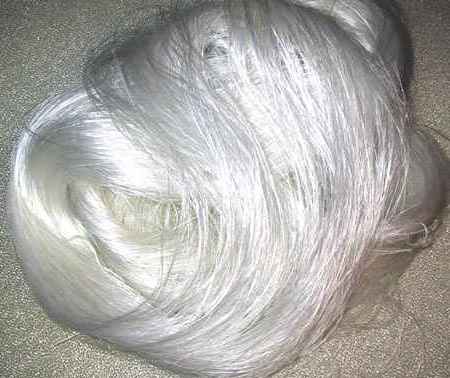
Degumming
A major undesirable constituent part of silk
is ‘silk gum’ or ‘sericin’ about 25% of total mass. Sericin is removed
by degumming. Degumming is the process of removing the sericin, or silk
gum, from silk. Removing the gum improves the sheen, color, hand, and
texture of the silk. Because the gum can serve as a protective layer, it
is typically left on the silk until it is ready to dye. In some cases,
the fabric is woven to completion, and then degummed, to protect the
yarn from abrasion on the loom. The process involved to remove these
impurities is called ‘degumming’ or ‘scouring’ of silk.
 |
| Silk |
Fibroin - 70-80%
Sericin - 20-305
Waxy matter - 0.4-0.8%
Carbohydrates - 1.2-1.65
Inorganic matter - 0.7%
Pigment - 0.2%
The process of eliminating “Gum (sericin)” from raw silk is known as degumming of silk. Degumming of silk involves mainly the removal of sericin from the fibroin. Sericin is insoluble in water. It is comparatively easily hydrolyzed, whereby the long protein molecule of sericin, is broken down into smaller fractions, which are easily dispersed or solubillsed in hot water.
Typical Recipe for Silk Degumming:
Wetting agent……………………=0.5-1.0 g/l
Sequestering agent…………….=1.0-2.0 g/l
Antifoaming agent……………...=0.5-1.0 g/l
Natural soap…………………….=15.0-30.0 g/l
TSP/Soda ash…………………..=1.0-3.0 g/l
Detergent………………………..=1.0-3.0 g/l (not mandatory if use soda)
Temperature…………………….=90-95°C
Time………………………………=90-120 min
pH…………………………………=9.5-10.5
M:L………………………………..=1:10
Working Procedure:
- Set the bath with substrate at room temperature and add soap and other necessary auxiliaries.
- If necessary add trisodium phosphate (TSP) or soda ash to maintain desired pH 9-10.
- Raise the temperature to 95° and run for 2 hours for optimum removal of sericin gum.
- Cool down to 70°C and then drop the bath.
- Wash it with warm and cold water successively.
5 July 2012
Jute Grading
Jute Grading:
Grading System of Jute Fiber:
Jute is a natural vegetable fiber under the category of bast fibers like flax,
hemp, kenaf and ramie. Since ancient times, it has been traditionally
grown in the eastern part of the Indian subcontinent, which make up of
the present day West Bengal of India and plains of Bangladesh. Grading
is done after the barky ends are cut off. There are six grades both for
White and Tossa jute. The characteristics specified for various grades
are given below.
 |
Jute fibers are graded according to three qualities of fibers. They are-
On a basis of fiber properties:
I.Length
II.Strength
III.Fineness
IV.Color
V.Lusture
VI.Roots and cleanliness and uniformity in color.
On the basis of color:
There are two colors-
On a basis of fiber properties:
I.Length
II.Strength
III.Fineness
IV.Color
V.Lusture
VI.Roots and cleanliness and uniformity in color.
On the basis of color:
There are two colors-
- White and golden
- Brown to red Corresponding to the main varieties capsularies and olitorius.
- A bottom
- B bottom
- C bottom
- X bottom
- Pucca grading
- Kutcha grading
Raw jute from which roots have been cut.
White Jute:
Bangla white special (BWS): White or creamy Finest texture Very good luster, clean, well hackled Completely free from any defects of jute Entirely free from red ends
Bangla White-A (BW-A): White to light cream Fine texture Strong and very good luster, clean Completely free from red ends and any blemish
Bangla White-B (BW-B): Light cream to straw color Good texture Strong and good luster, well hackled Free from blemish and red ends excluded .
Bangla White-C (BW-C): Light grey or light reddish to straw color Sound strength Average luster Clean but free from croppy or hard gummy Tops and roots and red soft ends are permissible.
Bangla White-D (BE-D): Any color Average strength Occasional bark and specks permissible Slightly croppy and gummy tops permissible Red ends also permissible.
Bangla White-E(BW-E): Any color Any strength but free from perished fibers Unretted jute.
Tossa Jute:
Bangla Tossa Special (BTS):
1 .Uniform sliver grey to golden color
1.Light to medium grey color
White Jute:
Bangla white special (BWS): White or creamy Finest texture Very good luster, clean, well hackled Completely free from any defects of jute Entirely free from red ends
Bangla White-A (BW-A): White to light cream Fine texture Strong and very good luster, clean Completely free from red ends and any blemish
Bangla White-B (BW-B): Light cream to straw color Good texture Strong and good luster, well hackled Free from blemish and red ends excluded .
Bangla White-C (BW-C): Light grey or light reddish to straw color Sound strength Average luster Clean but free from croppy or hard gummy Tops and roots and red soft ends are permissible.
Bangla White-D (BE-D): Any color Average strength Occasional bark and specks permissible Slightly croppy and gummy tops permissible Red ends also permissible.
Bangla White-E(BW-E): Any color Any strength but free from perished fibers Unretted jute.
Tossa Jute:
Bangla Tossa Special (BTS):
- Uniform golden or reddish color
- Finest texture
- Very strong
- Very good luster
- Clean cut and well hackled
- Completely free from any defects.
1 .Uniform sliver grey to golden color
- Fine texture
- Strong and good luster
- Clean cut and well hackled
- Completely free from any blemish.
- Fine texture
- Strong and good luster
- Clean cut and well hackled
- Completely free from any blemish.
1.Light to medium grey color
- Sound clean
- Good texture
- Average luster
- Clean cut and well hackled
- Free from any defects
- Sound clean
- Good texture
- Average luster
- Clean cut and well hackled
- Free from any defects
- Mixed colors
- Average strength
- Occasional bark and soft specks allowable
- free from runners
- Slightly croppy and gummy tops permissible
- Well cut and hackled but free from black root ends.
- Mixed colors
- Average strength
- Occasional bark and specks allowable
- Free from runners
- croppy and gummy tops permissible
- Rough cut and hackled
- Free from black root ends
- Any color
- Any strength but free from unretted jute
- Stick and perished fibers
- Rough cut and hackled bark and hard Centre permissible
Raw jute from which roots have not been cut.
Kutcha bales are graded as follows-
Kutcha bales are graded as follows-
- Tops
- Middle
- Bottoms
- B-bottoms
- C-bottoms
- X-bottoms
- Very strong fiber
- Excellent color and luster
- Free from all defects
- Cutting not more than (White 15% Tossa 10%)
- Strong sound fibers
- Average color and luster
- Free from all specks runners and harsh crop end (White 25% Tossa 15%)
- Sound fibers
- Medium strength
- Free from all hard centered jute (White 30% Tossa 20%)
- Sound fiber
- Medium strength
- Not suitable for higher grade(White 35% Tossa 25%)
- Medium strength
- Any color
- Free from runners and choppiness.
- Weak, harsh jute
- Free from tagled jute and stick
- Tangled jute
- Free from any dust and cuttings
15 June 2012
Properties of Jute Fiber
Jute
is a bast fiber used for sacking, burlap, and twine as a backing
material for tufted carpets. It is a long, soft, shiny fiber that can
be spun into coarse, strong threads. It is one of the cheapest natural
fibers, and is second only to cotton in amount produced and variety of
uses. Jute fibers
are composed primarily of the plant materials cellulose, lignin, and
pectin. Both the fiber and the plant from which it comes are commonly
called jute. It belongs to the genus Corchorus in the basswood family,
Tiliaceae.
Properties of Jute Fiber:
- Jute fibre is 100% bio-degradable and recyclable and thus environmentally friendly.
- Jute is a natural fibre with golden and silky shine and hence called The Golden Fibre.
- Jute is the cheapest vegetable fibre procured from the bast or skin of the plant's stem.
- It is the second most important vegetable fibre after cotton, in terms of usage, global consumption, production, and availability.
- It has high tensile strength, low extensibility, and ensures better breathability of fabrics. Therefore, jute is very suitable in agricultural commodity bulk packaging.
- It helps to make best quality industrial yarn, fabric, net, and sacks. It is one of the most versatile natural fibres that has been used in raw materials for packaging, textiles, non-textile, construction, and agricultural sectors. Bulking of yarn results in a reduced breaking tenacity and an increased breaking extensibility when blended as a ternary blend.
- Unlike the fiber known as hemp, jute is not a form of (Cannabis). Therefore it can be much more easily distinguished from forms of Cannabis that produce a narcotic
- Jute is one of the most versatile natural fibres that has been used in raw materials for packaging, textiles, non-textile, and agricultural sectors.
- Jute stem has very high volume of cellulose that can be procured within 4-6 months, and hence it also can save the forest and meet cellulose and wood requirement of the world.
- The best varieties of Jute are Bangla Tosha - Corchorus olitorius (Golden shine) and Bangla White - Corchorus capsularis (Whitish Shine), and Mesta or Kenaf (Hibiscus cannabinus) is another species with fibre similar to Jute with medium quality.
- Raw Jute and Jute goods are interpreted as Burlap, Industrial Hemp, and Kenaf in some parts of the world.
Uses of Jute Fiber
Jute is the second most important vegetable fibre after cotton; not only for cultivation, but also for various uses.
- Jute is used chiefly to make cloth for wrapping bales of raw cotton, and to make sacks and coarse cloth.
- The fibres are also woven into curtains, chair coverings, carpets, area rugs, hessian cloth, and backing for linoleum.
- While jute is being replaced by synthetic materials in many of these uses, some uses take advantage of jute's biodegradable nature, where synthetics would be unsuitable.
- Jute butts, the coarse ends of the plants, are used to make inexpensive cloth.
- Traditionally jute was used in traditional textile machineries as textile fibres having cellulose (vegetable fibre content) and lignin (wood fibre content). But, the major breakthrough came when the automobile, pulp and paper, and the furniture and bedding industries started to use jute and its allied fibres with their non-woven and composite technology to manufacture nonwovens, technical textiles, and composites.
- Jute can be used to create a number of fabrics such as Hessian cloth, sacking, scrim, carpet backing cloth (CBC), and canvas.
- Hessian, lighter than sacking, is used for bags, wrappers, wall-coverings, upholstery, and home furnishings.
- Sacking, a fabric made of heavy jute fibres, has its use in the name.
- Diversified jute products are becoming more and more valuable to the consumer today. Among these are espadrilles, floor coverings, home textiles, high performance technical textiles, Geotextiles, composites, and more.
- Jute is also used in the making of ghillie suits which are used as camouflage and resemble grasses or brush
Another diversified jute product is Geotextiles, which made this agricultural commodity more popular in the agricultural sector. It is a lightly woven fabric made from natural fibres that is used for soil erosion control, seed protection, weed control, and many other agricultural and landscaping uses. The Geotextiles can be used more than a year and the bio-degradable jute Geotextile left to rot on the ground keeps the ground cool and is able to make the land more fertile.
http://textilelearner.blogspot.com/
7 June 2012
Bleaching Process of Jute Fiber/Fabric
Jute:
Jute is extracted from the bark of the
white jute plant, Corchorus capsularis and to a lesser extent from C.
olitorius (tossa jute). Jute fibre
also called as the ―”golden fibre” is one of nature‘s strongest
vegetable fibres and has high insulating and anti-static properties,
moderate moisture regain and low thermal conductivity. Jute ranks second
in terms of production. Bangladesh and India (West Bengal) are the main
producers of jute in the world, with Myanmar and Nepal producing
smaller quantities of jute. Of the various jute products
manufactured, sacking contributes for the bulk. In addition, jute yarn
and twines are also used for household textiles. It is also being
blended with other fibres and used in cushion covers, toys, wall
hangings, lamp shades and shoes. Use of jute in rigid packaging and
reinforced plastic is increasing and is replacing wood pulp and paper. Geotextiles are also made from jute.
Bleaching of Jute:
Although jute fibres contain considerable amount of impurities, jute materials are generally bleached without prior scouring due to its alkali sensitivity. Jute differs from linen in its high lignin content (about 11-12% dry weight). The lignin, together with hemicelluloses, provides inter-cellular binding material known as lamella, holding the fibre together. In contrast to linen, it is neither desirable nor necessary to delignify jute. Jute is effectively bleached by hydrogen peroxide while most of the lignin remains.
A consequence of the presence of lignin in bleached jute is that its whiteness is not fast to light.
Bleaching Process:
Jute may be successfully bleached with sodium hypochlorite solution having 3-7 g/l available chlorine, using sodium carbonate to maintain pH of 10 to 10.5 at room temperature for 1 to 2 hours. It is advisable to add 1 to 2 g/l wetting agent, when the material is directly bleached without scouring. It is then washed and antichlored with 0.2% sodium sulphate for 20 minutes at 50 ̊C.
Sodium chlorite is suitable for bleaching of jute. It removes more lignin than hydrogen peroxide. Treatment of jute fabric with acidified 4% (o.w.m.) sodium chlorite solution, pH 4 to 4.5 at 90 ̊C for 90 minutes improves the whiteness of the materials.
The bleaching with hydrogen peroxide causes a markedly lower loss of weight (10% as against 17.9% in chlorite bleaching) and slightly lower loss in strength.
In jigger machine, the recipe (% o.w.m.) of jute bleaching as follows:
The conventional hydrogen peroxide bleaching requires high temperature which may damage jute material. So cold bleaching may be carried out by treating the jute materials with a solution containing 6% hydrogen peroxide, 4% caustic soda, 4% sodium silicate, 2% soda ash and 1% soap followed by 24 hours storing at room temperature. The whiteness achieved may not be very high.
http://textilelearner.blogspot.com/
 |
| Jute fiber |
Although jute fibres contain considerable amount of impurities, jute materials are generally bleached without prior scouring due to its alkali sensitivity. Jute differs from linen in its high lignin content (about 11-12% dry weight). The lignin, together with hemicelluloses, provides inter-cellular binding material known as lamella, holding the fibre together. In contrast to linen, it is neither desirable nor necessary to delignify jute. Jute is effectively bleached by hydrogen peroxide while most of the lignin remains.
A consequence of the presence of lignin in bleached jute is that its whiteness is not fast to light.
Bleaching Process:
Jute may be successfully bleached with sodium hypochlorite solution having 3-7 g/l available chlorine, using sodium carbonate to maintain pH of 10 to 10.5 at room temperature for 1 to 2 hours. It is advisable to add 1 to 2 g/l wetting agent, when the material is directly bleached without scouring. It is then washed and antichlored with 0.2% sodium sulphate for 20 minutes at 50 ̊C.
Sodium chlorite is suitable for bleaching of jute. It removes more lignin than hydrogen peroxide. Treatment of jute fabric with acidified 4% (o.w.m.) sodium chlorite solution, pH 4 to 4.5 at 90 ̊C for 90 minutes improves the whiteness of the materials.
The bleaching with hydrogen peroxide causes a markedly lower loss of weight (10% as against 17.9% in chlorite bleaching) and slightly lower loss in strength.
In jigger machine, the recipe (% o.w.m.) of jute bleaching as follows:
- Hydrogen peroxide (50%):3 to 6%
- Sodium silicate : 6to 8%
- Caustic soda : 0.5 to 0.7%
- Nonionic detergent : 0.2 to 0.5 %
- Chelating agent : 0.05%
- pH : 11
- Temperature : 80 to 85 ̊C
- Time : 120 minutes
The conventional hydrogen peroxide bleaching requires high temperature which may damage jute material. So cold bleaching may be carried out by treating the jute materials with a solution containing 6% hydrogen peroxide, 4% caustic soda, 4% sodium silicate, 2% soda ash and 1% soap followed by 24 hours storing at room temperature. The whiteness achieved may not be very high.
http://textilelearner.blogspot.com/
Subscribe to:
Posts
(Atom)